Home Loans for Low Income Earners in Brisbane Southside, QLD, Your Options Explained
If your income sits at the lower end of the scale, the home loan process can feel like it was designed for someone else. Lenders assess what you earn, what you owe and what you spend, and a modest income makes every one of those numbers tighter. But tight is not the same as impossible, and the gap between what a single lender will do and what the right lender will do is often larger for low income borrowers than for any other group.
In Brisbane Southside, QLD, the main levers available to you are the federal guarantee schemes, Queensland's first home grant, and the way a broker structures your application across a panel that includes lenders with genuinely different serviceability policies. Whether you're buying on a single income, working part-time, or earning just enough to cover rent with a little left over each month, the pathway looks different depending on which of those levers applies to your situation.
Our team helps low income buyers across Brisbane Southside, QLD compare their options and work out which lenders will actually lend in their position, comparing across 50+ lenders. The first home loan side of it is often where the most useful options sit, because that is where most of the government support is concentrated.
Key takeaways
- The First Home Guarantee lets eligible buyers purchase with a 5% deposit and no LMI.
- Queensland's $30,000 first home grant applies to new builds under $750,000.
- Single parents can buy with a 2% deposit under the Family Home Guarantee.
Can low income earners actually get a home loan in Brisbane Southside, QLD?
Yes, low income earners can get a home loan in Brisbane Southside, and several government schemes are specifically designed to help. The main constraint is not whether you qualify but which properties fall within your borrowing capacity, and in Brisbane Southside that usually means units and townhouses rather than freestanding houses. Unit medians across the area sit well under the $1,000,000 price cap that applies to the federal guarantee schemes, which means the schemes are genuinely useful here rather than theoretical.
How do lenders assess income for low income borrowers?
Lenders don't set a minimum income threshold for a home loan. What they assess is whether your income, after living expenses and existing debts, leaves enough surplus to service the repayments with a safety margin built in. That margin is the APRA serviceability buffer, which requires lenders to add 3.0% on top of your actual rate when testing whether you can afford the loan.
Living expenses are measured against the Household Expenditure Measure, a benchmark the Melbourne Institute publishes quarterly. Lenders use the higher of your declared expenses or the HEM figure. Declaring lower expenses than your actual spending won't help, because the lender substitutes the benchmark if your number comes in below it.
How different income types are read:
- › Part-time base salary: counted in full once you're past probation and the role is ongoing.
- › Casual income: most lenders want around 12 months in the same field before they'll count it consistently.
- › Centrelink family tax benefit: accepted by some lenders, usually with a child age cut-off, and requires a current entitlement letter.
- › Child support: accepted by some lenders with a formal court order or assessment, often subject to a child age condition.
- › Second job or side income: treated like casual income, typically needing a consistent history before it is counted at all.
What I see most often is a buyer who's been told by one lender that their income isn't enough, but they've never had someone look at how all their income types add together. A part-time salary plus consistent family tax benefit plus a small amount of child support can look very different at one lender versus another, and the difference is not small.
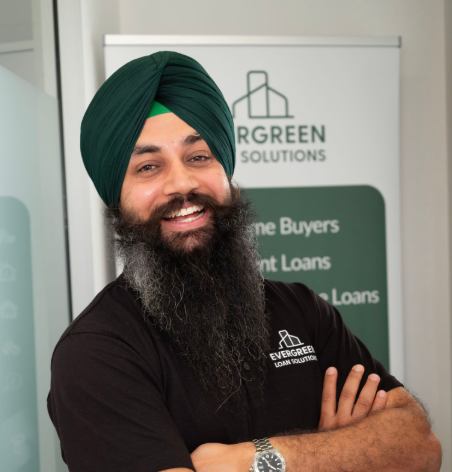
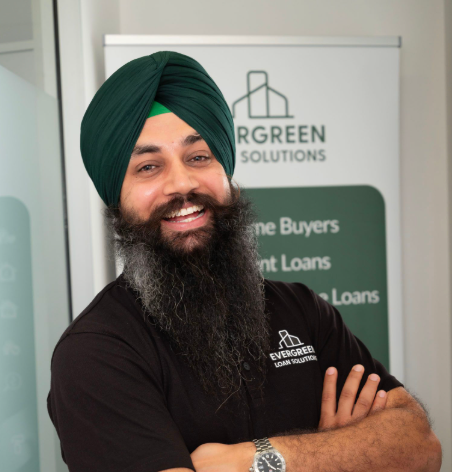
Gundeep Virk · Director, Evergreen Loan Solutions · Chat to Gundeep →
What eligibility criteria apply to low income home loan applicants?
There's no income floor for a standard home loan, but there are practical thresholds that matter. Your income needs to cover the assessed repayments plus living expenses with surplus remaining. On a small deposit, LMI adds to the loan balance and to the repayments, so the deposit size and the income level are directly connected.
What lenders will verify:
- › Employment status: a current contract or appointment letter confirming the role is ongoing, not casual or fixed-term where possible.
- › Income evidence: two or three recent payslips plus a year-to-date figure, or a letter from Centrelink for benefit income.
- › Credit history: existing defaults or missed payments will narrow the lender panel, particularly at lower income levels where surplus is already thin.
- › Existing commitments: credit card limits are assessed as though fully drawn, typically at around 3% to 3.8% of the limit per month, regardless of the actual balance.
- › Genuine savings: most lenders want to see the deposit built up over at least three months, not arrived as a lump sum gift, though some lenders treat gift deposits more flexibly.
Closing unused credit cards before you apply is one of the most straightforward ways to lift your borrowing capacity at a lower income level. A $10,000 credit card limit you never use can reduce what you're able to borrow by more than $30,000 at some lenders, because it's counted as a live commitment.
How much can low income earners borrow in Brisbane Southside, QLD?
Borrowing capacity depends on your income, expenses and existing debts, and it shifts between lenders because each applies its own version of the serviceability test. On a modest income, the difference between lenders can be meaningful, which is why comparing across a panel matters more for this buyer type than most.
In Brisbane Southside, unit medians across core suburbs like Moorooka, Annerley and Coopers Plains sit in the high $700,000s to mid $800,000s range, all below the $1,000,000 price cap that applies to the federal schemes. CoreLogic data shows Moorooka units at a median of $798,800 with 25.30% growth over 12 months, and Annerley units at $803,500 with 14.79% growth. These are the suburbs where a low income buyer using a scheme deposit is working in realistic territory.
APRA's debt-to-income cap, which limits lenders from writing more than 20% of new loans at a DTI of 6x gross income or higher, affects higher-income borrowers more than lower ones. At a modest income, your borrowing capacity is usually constrained by the serviceability test rather than the DTI cap, which works in your favour in a competitive lending environment.
Source: CoreLogic (via YIP, mid-2026) and APRA.
| Get in touch Need help with a home loan on a lower income? We're a local team who understand how lenders actually assess your situation, not just your rate. We'll compare your options across 50+ lenders to find the right fit.
|
What government schemes can low income earners use?
Several federal schemes are designed precisely for buyers who can't save a 20% deposit, and Queensland's first home grant adds a significant cash contribution for new builds. The schemes don't require a minimum income, but they do have price caps, and in Brisbane Southside those caps point squarely at units rather than houses.
The options worth weighing:
- › First Home Guarantee: 5% deposit · no LMI · no income cap · Brisbane Southside price cap $1,000,000
- › Family Home Guarantee: 2% deposit · no LMI · single parents only · no first home buyer requirement · same $1,000,000 cap
- › Help to Buy: federal shared equity · government contributes up to 40% on a new home · income cap $103,000 single or $165,000 joint · $1,000,000 cap applies here
- › Queensland FHOG:$30,000 grant · new homes only · property under $750,000 · no income test
The Boost to Buy state shared-equity scheme is not currently available to Brisbane Southside buyers. The South East Queensland allocation is exhausted, with only regional Queensland places remaining. Help to Buy is the live federal shared-equity pathway, and it cannot be combined with a state shared-equity scheme.
A useful combination for a low income first home buyer purchasing a new unit or townhouse: the First Home Guarantee removes LMI, the Queensland FHOG adds $30,000 toward the purchase, and the duty exemption for new homes means no stamp duty at any price. That combination is meaningful on a tight budget.
Source: Housing Australia and Queensland Revenue Office.
How do mortgage brokers improve outcomes for low income borrowers?
The lender choice decides more of the outcome for low income borrowers than for almost any other group, because serviceability policies vary more widely at the lower end of the income scale. Three policy differences move the result, and they're not published side by side anywhere.
- › Benefit income acceptance: some lenders count family tax benefit and child support as primary income; others count only a portion, and others exclude it entirely.
- › HEM benchmark applied: lenders use different HEM bands based on household size and postcode. A family of four in Brisbane Southside will be assessed against a higher benchmark than a single person, which affects how much surplus the lender calculates you have.
- › Scheme lender access: not every lender participates in the First Home Guarantee and Family Home Guarantee, and those that do have their own credit policies on top of the scheme's own eligibility rules.
Comparing across a panel means finding which lender reads your income combination most generously while still meeting the scheme's requirements, and that comparison is what makes the difference between a decline and an approval.
When does a low income home loan not make sense yet?
If your income has only recently stabilised, pushing an application through before the lender can see a consistent history usually results in a worse outcome than waiting a reporting period. A casual income with six months of history looks meaningfully different to a lender than the same income with twelve months, and the loan offer reflects that difference.
Carrying a high credit card limit or an existing personal loan into an application can compress your borrowing capacity below the point where any scheme can bridge the gap. Clearing that debt first, even if it delays the application by six months, is usually the better path. The exception is where the gap between your current position and the minimum viable deposit is small enough that scheme access matters more than capacity, in which case applying sooner and accepting the lower loan amount may be the right call. That trade-off is worth working through with a broker who can run both scenarios.
Where I'd lean, if someone's income is stable but their credit card limits are inflating the assessment, is to close the cards first and apply in three months. The difference in what they can borrow is almost always more than the three months of waiting felt like it would cost.
Gundeep Virk · Director, Evergreen Loan Solutions · Chat to Gundeep →
What approval challenges do low income earners face?
Where the process gets harder:
- › Thin income history: casual or part-time workers need a longer consistent history than permanent employees, and a recent role change resets that clock.
- › Benefit income excluded: a buyer who relies partly on Centrelink income may find that a mainstream lender excludes it, reducing assessed income below what's needed for approval.
- › Multiple applications narrowing the panel: each lender application leaves a credit enquiry on your file for five years. Applying to three or four lenders individually signals credit stress and makes the next lender more cautious.
- › Scheme place availability: the First Home Guarantee and Family Home Guarantee have a limited number of places each financial year. Applying without confirming a place is available, or without a lender who participates in the scheme, can cost access to the scheme entirely.
Frequently Asked Questions
Is there a minimum income to get a home loan in Australia?
No minimum income applies, but your income must cover assessed repayments plus living expenses with surplus remaining after the APRA buffer is applied. The practical floor depends on the property price and your expenses, not a published dollar threshold.
Can single parents use the Family Home Guarantee on a lower income?
Yes, the Family Home Guarantee allows a 2% deposit with no LMI and no first home buyer requirement, which makes it accessible on a modest income. You must be genuinely single, and the Brisbane Southside price cap is $1,000,000.
Does Help to Buy suit low income buyers in Brisbane Southside?
It can, because the government taking up to 40% equity on a new build reduces the loan size and the repayments. The income cap is $103,000 for a single applicant, so it targets lower and middle income buyers specifically.
Is the First Home Guarantee or Help to Buy better for a low income buyer?
The First Home Guarantee suits buyers who want full ownership from day one with a 5% deposit and no LMI. Help to Buy reduces the loan size further by sharing equity, which means lower repayments, but the government retains a share in the property. The right option depends on your income and the property price.
Will Centrelink income count toward my home loan application?
Some lenders accept family tax benefit and child support as assessable income, usually with a current entitlement letter and a child age condition. Others exclude it. Lender choice is where this question is answered, not the scheme.
Should a low income earner use a mortgage broker or go directly to a lender?
A mortgage broker, every time. Lenders have different policies on benefit income, casual work and scheme participation, and a broker who compares across a wide panel can find the lender whose policy fits your income combination, rather than leaving you to apply and be declined one at a time.
Your Next Steps
For low income earners in Brisbane Southside, the path to ownership is rarely blocked entirely. It's usually narrowed to the right lender, the right scheme and the right property type, and the combination that works for your situation is worth identifying before you apply. A poorly matched application doesn't just get declined, it leaves a mark on your credit file that makes the next one harder.
Ready to find out which lenders will work best for your situation? Contact the Evergreen Loan Solutions team or call 0421 152 859. We'll canvas our 50+ lender panel and find the most suitable options for your circumstances.
|
External Resources
Evergreen Loan Solutions, Eight Mile Plains and Brisbane Southside. This is general information only, this article does not constitute financial advice. Please consider your own circumstances and seek professional advice before making any financial decisions.