Home Loans for Sole Traders in Brisbane Southside, QLD, What Lenders Actually Check
Running your own business means your income looks nothing like a payslip, and most lenders are built around payslips. Whether you're a tradie on your first ABN year, a consultant with a decade of returns, or a sole operator whose income swings with the seasons, the lending assessment works differently for you - and knowing how it works changes what you can borrow.
The good news is that sole traders in Brisbane Southside, QLD are getting approved every week. The challenge is that lenders don't all read self-employed income the same way. Some require two full years of tax returns and won't budge. Others accept an accountant's letter in place of a second year. Some add depreciation and one-off expenses back to your taxable income before calculating what you can service; others don't. That gap between lenders is where the difference in your borrowing capacity actually lives.
Our team helps sole traders across Brisbane Southside, QLD work through exactly this, comparing options across 50+ lenders. The self-employed home loan side of lending is where lender choice matters most - and where the wrong starting point costs you the most time.
Key takeaways
- Most lenders want two years of tax returns; some accept one with an accountant's letter.
- Add-backs can lift your assessed income significantly - but only at some lenders.
- Sole traders can access the First Home Guarantee from a 5% deposit with no LMI.
Can sole traders get a home loan in Brisbane Southside, QLD?
Yes - sole traders can absolutely get a home loan, and plenty do. What changes is how lenders verify the income. A PAYG employee hands over two payslips. A sole trader hands over two years of tax returns, and a lender works backwards from those to figure out what you actually earn after expenses. The amount they'll lend depends heavily on which lender you apply with, because the rules for reading self-employed income aren't uniform across the market.
How do lenders assess sole trader income?
Lenders don't take your gross revenue. They take your taxable income - what's left after your business expenses - and use that as the base for their serviceability calculation. For most sole traders, that number is lower than what you actually keep, which is why add-backs matter.
An add-back is a non-cash or one-off expense that lenders recognise as not a real ongoing cost. Depreciation is the most common. A vehicle written down over five years reduces your taxable income every year without reducing your cash flow by the same amount. Some lenders will add that depreciation back before calculating your income. Others won't. A one-off legal fee, a piece of equipment purchased in a single year, or a COVID-related expense from several years ago - some lenders treat these as add-backs, some don't. The lender's own policy is what decides.
What the two-year rule actually means
Most lenders want two years of personal tax returns and two years of business tax returns (where you've lodged them separately). They average the income across the two years, and if year two is significantly higher than year one, some lenders use the lower figure rather than the average. That's a conservative approach that costs you borrowing capacity on paper, even when your business is genuinely growing.
When one year is enough
Some lenders will assess a sole trader on a single year of returns, usually where an accountant's letter confirms the business is ongoing and the income is sustainable. This is more common at non-bank and second-tier lenders than at the major banks. If you've only recently gone ABN but have strong income and a clean credit file, it's worth knowing which lenders apply this policy - because applying to one that won't is a wasted credit enquiry on your file.
The most common thing I see with sole trader applications is that the borrower has already applied somewhere, been told the income isn't enough, and walked away thinking that's the answer. It often isn't. The income was read one way by one lender, and a different lender with a different add-back policy would have reached a different number entirely.
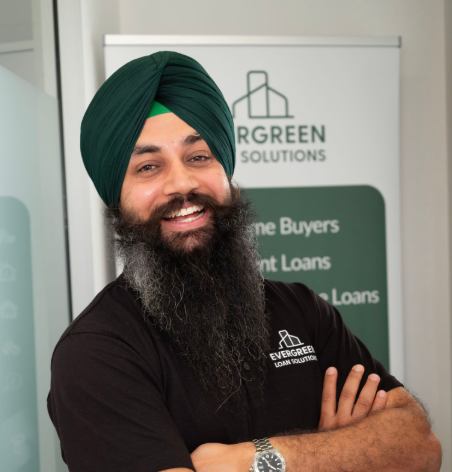
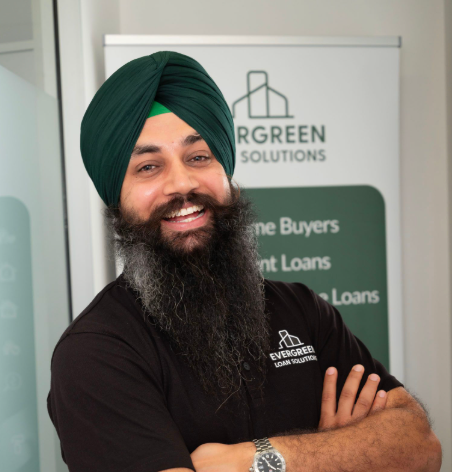
Gundeep Virk · Director, Evergreen Loan Solutions · Chat to Gundeep →
What eligibility criteria apply to sole traders?
Standard credit criteria still apply - credit score, genuine savings, deposit size, existing debts. What's different for sole traders are the business-specific requirements lenders look for before they'll accept the income as reliable.
What most lenders want to see:
- › ABN registration: typically active for at least twelve months before application, and often two years at major lenders.
- › GST registration: required by most lenders where annual turnover exceeds the GST threshold, and some lenders want it regardless.
- › Tax returns lodged and current: personal and business returns for the most recent one to two financial years, assessed with the ATO notice of assessment alongside them.
- › BAS statements: many lenders want the last four quarters as a cross-check on declared income, particularly where income has varied year to year.
- › Business bank statements: three to six months of statements showing consistent deposits, used by lenders to confirm the business is trading and cash flow is real.
- › Accountant's letter: required by most lenders, confirming the business is ongoing, profitable, and expected to continue - this is the document that can substitute for a second year of returns at some lenders.
Source: APRA.
How much can sole traders borrow in Brisbane Southside, QLD?
Borrowing capacity for sole traders follows the same serviceability mechanics as any other borrower - what changes is the income figure the lender plugs in. APRA requires lenders to assess all applications at a buffer above the actual rate, which means the assessment rate is typically around 9%. Your assessed income, minus your living expenses and existing commitments, has to service the loan at that higher rate.
The add-back policy is where lender choice most directly changes the number. A sole trader with $90,000 in taxable income and $15,000 of annual depreciation has an assessed income of $90,000 at one lender and $105,000 at another, before any other calculation is done. Over a thirty-year loan, that difference in assessed income is a meaningful difference in what you can borrow.
In Brisbane Southside, CoreLogic data shows house medians across the area range from around $830,000 in Rocklea to over $1,800,000 in Rochedale, with most suburbs sitting well above $1,200,000. Unit medians across suburbs like Coopers Plains, Moorooka and Annerley sit in the $800,000 to $850,000 range. For a sole trader targeting a unit purchase, the deposit and borrowing capacity questions are more achievable than the house medians suggest at first glance.
Source: CoreLogic (via YIP, mid-2026) and APRA.
| Get in touch Need help with a home loan as a sole trader? We're a local team who understand how lenders actually assess your situation, not just your rate. We'll compare your options across 50+ lenders to find the right fit.
|
What government schemes can sole traders use?
Being self-employed doesn't disqualify you from any of the major federal schemes. Eligibility is based on residency, income and property price - not employment type. The options worth knowing:
- › First Home Guarantee: 5% deposit, no LMI, no income cap. Brisbane Southside sits within the Brisbane capital-city area, so the price cap here is $1,000,000. Most house medians across the area exceed that, so this scheme works best for unit and townhouse purchases.
- › Family Home Guarantee: 2% deposit for single parents and single legal guardians. First home buyer status is not required. The same $1,000,000 price cap applies.
- › Help to Buy: federal shared equity, with income caps of $103,000 for singles and $165,000 for couples or single parents. Income is assessed on your most recent ATO Notice of Assessment - the same document lenders use, so there's no separate means test to navigate.
- › Queensland First Home Owner Grant:$30,000 for eligible new home contracts. Applies to new builds and substantially renovated properties under $750,000. Owner-builder applications use the foundations-laid date.
- › Stamp duty concession: full exemption on established homes up to $700,000 for first home buyers, with a sliding concession to $800,000. New homes attract no duty regardless of price for eligible first home buyers.
The Boost to Buy state shared-equity scheme is not currently available to Brisbane Southside buyers - the South East Queensland allocation has been exhausted, and only regional Queensland places remain.
Source: Housing Australia and Queensland Revenue Office.
How do mortgage brokers improve outcomes for sole traders?
The lender choice decides the outcome here more than for almost any other borrower type. Three policy differences move the number for sole traders, and they're not published side by side anywhere.
- › Add-back policy: which lenders include depreciation, one-off expenses and pre-paid items in their income calculation, and which use taxable income only.
- › Second-year substitution: whether an accountant's letter can replace a second year of tax returns, which is the difference between applying now or waiting another full financial year.
- › Income averaging method: whether the lender averages the two years of returns, takes the lower, or accepts the most recent year where it's meaningfully higher - each produces a different assessed income from the same documents.
Comparing across a broad panel before applying identifies which of these policies is most favourable for your specific income profile, and avoids a declined application sitting on your credit file.
When does a sole trader home loan not make sense right now?
If your most recent tax return doesn't reflect your actual income - because you've just transitioned from PAYG, because a strong year is still being lodged, or because income dropped in year one and recovered in year two - applying before the better return is on the record can cost you significantly. A lender that averages two years and takes the lower of them will use your weaker year against you.
The same logic applies where your taxable income is intentionally minimised through legitimate deductions. A sole trader who maximises depreciation and expense claims to reduce their tax position may find their assessed borrowing capacity is lower than their actual cash position suggests. In those cases, it's worth a conversation with your accountant about whether the tax strategy and the home loan strategy are working in the same direction, before you apply.
Where a sole trader's returns show strong, consistent income and the add-backs are clean, I'd rather we get in front of the right lenders now than wait for a calendar date. But where the returns are in a transitional year, we'll usually say: wait, get the lodgement right, then apply with the full picture - the approval is cleaner and the rate is better.
Gundeep Virk · Director, Evergreen Loan Solutions · Chat to Gundeep →
What approval challenges do sole traders face?
Sole traders face a different set of hurdles at the application stage. These are the ones that catch most people out.
Where things go sideways:
- › Returns not yet lodged: lenders need lodged returns, not estimates or accountant's projections. If the most recent financial year's return hasn't been lodged, the lender uses the year before - which may not reflect your current income.
- › Business debts on the file: equipment finance, a business overdraft, or a chattel mortgage in your name reduces your serviceability capacity on a personal home loan. Some lenders can exclude a business liability where it's clearly supported by corresponding business income, but not all.
- › Income trending downward: where year two is lower than year one, lenders read that as a signal. An accountant's letter explaining the reason - a one-off write-down, a client transition, a deliberate tax strategy - can address it, but it has to be documented.
- › Multiple credit enquiries: applying to several lenders directly, rather than through a broker who can identify the right one first, leaves a trail of enquiries on your credit file that itself becomes a question mark for the next lender.
- › GST and ATO payment plans: an active ATO payment plan shows on bank statements and lenders treat it as an ongoing commitment. Where possible, clearing it before application cleans up the picture considerably.
Frequently Asked Questions
Can I get a home loan if I've only been a sole trader for one year?
Yes, at some lenders. Most major banks want two years, but certain non-bank and specialist lenders will assess a sole trader on a single year of returns where an accountant's letter confirms the business is viable. Your credit profile and deposit size both influence which lenders will look at this.
How do lenders calculate income from tax returns for a sole trader?
Lenders typically take your net profit from your personal tax return, then add back any non-cash deductions - most commonly depreciation - that their own policy allows. The resulting figure is averaged across the two return years, though some lenders take the lower year rather than the average.
Do I need an accountant's letter to apply?
Most lenders require one. It confirms the business is operating, profitable, and expected to continue trading. At lenders who accept one year of returns, the letter also substitutes for the second year of documented history, so it carries more weight there than at lenders who always require two years.
Can sole traders access the First Home Guarantee with a 5% deposit?
Yes. The First Home Guarantee has no income cap since October 2025 and self-employment doesn't affect eligibility. The Brisbane Southside price cap is $1,000,000, which covers units and townhouses across the area but excludes most houses given current medians.
Does an ATO payment plan affect my home loan application?
It can. Most lenders treat an active payment plan as an ongoing financial commitment and factor the repayment into their serviceability calculation. Clearing it before applying - where that's feasible - generally produces a cleaner assessment and a higher borrowing figure.
Is a mortgage broker or bank better for a sole trader home loan?
A mortgage broker, every time. The assessment of self-employed income varies more between lenders than almost any other variable in a home loan application. A broker who can identify which lenders apply favourable add-back policies and accept one year of returns - before you apply - saves you both time and credit enquiries.
Your Next Steps
For sole traders, the home loan outcome depends far more on which lender you're in front of than on your income itself. The same two years of returns produce different assessed incomes at different lenders, and only one of those numbers needs to work. Getting that match right - before the application goes in - is what changes the result.
Ready to find out which lenders will work best for your situation as a sole trader? Contact the Evergreen Loan Solutions team or call 0421 152 859. We'll canvas our 50+ lender panel and find the most suitable options for your circumstances.
|
External Resources
Evergreen Loan Solutions, Eight Mile Plains and Brisbane Southside. This is general information only, this article does not constitute financial advice. Please consider your own circumstances and seek professional advice before making any financial decisions.