How Much Do You Need to Earn to Buy in Brisbane Southside, QLD, What Lenders Actually Check
The income question is the wrong starting point, and most buyers find that out after they've already ruled themselves out. Lenders don't set a salary threshold you have to clear before they'll look at you. They calculate a number based on what you earn, what you owe, and what you spend, and that number is different at every lender on the panel.
What that means in practice is that two buyers on identical salaries can walk away from different lenders with borrowing capacity figures $80,000 to $120,000 apart, because of how each lender treats overtime, a car loan, a credit card limit, or a HECS repayment. The income that gets you into Brisbane Southside's property market depends as much on which lender you're sitting with as it does on what's in your pay packet.
Our team helps buyers across Brisbane Southside, QLD work through exactly this, comparing how each lender reads your income across our panel. The home loan structure and the lender you end up with will shape your borrowing number more than the rate will.
Key takeaways
- Lenders assess you at roughly 9% to stress-test repayments, not your actual rate.
- Most Brisbane Southside house medians now sit above the $1,000,000 scheme cap.
- Overtime, HECS and credit card limits each shift your borrowing number materially.
What income do you actually need to buy in Brisbane Southside, QLD?
There's no single income figure that unlocks Brisbane Southside's property market, because borrowing capacity is calculated from your full financial picture, not from your salary alone. A buyer on $90,000 with no debt and a modest lifestyle can often borrow more than a buyer on $130,000 carrying a car loan, a credit card limit and HECS repayments. The number moves with every commitment you hold, and it moves differently depending on which lender assesses you.
How do lenders calculate how much you can borrow?
Lenders don't assess you at your actual interest rate. APRA requires them to add a 3.0% serviceability buffer on top of whatever rate you'd actually pay, which means most buyers are stress-tested at somewhere around 9% right now. That buffer is what decides how much of your income is left after the loan is serviced, and it's the main reason your borrowing capacity looks lower than you'd expect from a basic repayment calculator.
Your expenses are assessed at whichever is higher: what you declare, or the Household Expenditure Measure benchmark. The HEM is a floor set by the Melbourne Institute and built from household expenditure surveys. Declaring lower expenses than the benchmark doesn't help, because lenders substitute the benchmark automatically. What the HEM excludes matters too: rent, council rates, home insurance and existing loan commitments are all added on top of it as separate figures.
Credit card limits are assessed as if they're fully drawn, at roughly 3% to 3.8% of the limit per month. A $15,000 limit you've never used still reduces your assessed capacity. Closing cards you don't need before you apply is one of the most straightforward things you can do to lift your number before a lender sees your file.
We see buyers rule themselves out based on the income figure they think a lender needs, when the real question is whether their commitments leave enough room after the buffer is applied. Often the answer is yes, and the path there is about restructuring what's already in the file rather than waiting to earn more.
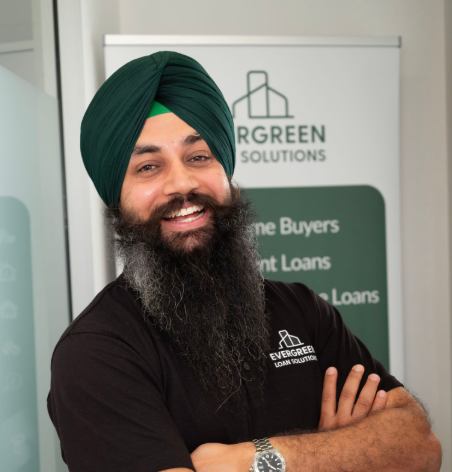
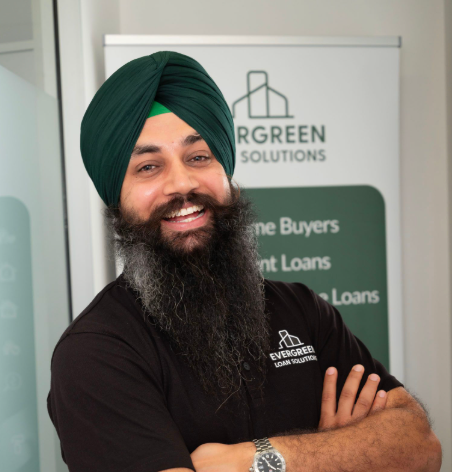
Gundeep Virk · Director, Evergreen Loan Solutions · Chat to Gundeep →
What types of income do lenders count, and how much of each?
Base salary from a permanent role is taken at full value, typically from your two most recent payslips. Everything beyond that is where lender policies diverge, and where shopping across the panel changes your number.
How different income types are typically assessed:
- › Overtime and shift penalties: most lenders take somewhere between 80% and 100% of your overtime average, and the history required ranges from 6 to 24 months. That spread means the right lender can add a meaningful amount to your assessed income.
- › Casual income: typically accepted at around 100% once you've built around 12 months of consistent history in the same field. Agency or bank shifts are treated similarly.
- › Bonus and commission: most lenders average the last one to two years and count somewhere between 80% and 100% of that figure. Two years of history strengthens the assessment.
- › HECS/HELP repayments: your compulsory repayment is counted as an ongoing commitment. It's the repayment that reduces capacity, not the balance, so a large HECS debt that's nearly paid down has less impact than a moderate one that still sits in a high repayment band.
- › Rental income: typically counted at 80% of gross rent, with holding costs added separately.
- › Self-employed income: two years of tax returns is the standard. Some lenders accept one year with an accountant's declaration, which is where specialist lender access matters for ABN holders and sole traders.
Source: APRA.
How much do Brisbane Southside's property prices actually require?
CoreLogic data shows the median house price across Brisbane Southside's approved suburbs ranging from $830,000 in Rocklea to over $2,480,000 in Robertson, with most established suburbs sitting firmly above the $1,000,000 mark. Upper Mount Gravatt sits at $1,334,000, Annerley at $1,400,000, and Coopers Plains at $1,260,000. Units tell a different story: Macgregor's median unit is $722,500, Coopers Plains $846,500, and Moorooka $798,800, all within reach of scheme-eligible buyers.
On a standard 80% LVR loan, a $1,300,000 purchase needs a $260,000 deposit. On a 90% loan with LMI, that same purchase needs $130,000 plus the cost of lender's mortgage insurance, which on a loan that size runs to approximately $27,000 to $41,500 added to the loan. The deposit route you take is directly connected to the income you need to service what's left.
The routes worth weighing for Brisbane Southside buyers:
- › 20% deposit, no LMI: full house or unit purchase · no LMI added to the loan · higher deposit required · lower ongoing repayments
- › 10% deposit with LMI: 90% LVR · LMI approximately $19,500 to $41,500 depending on loan size · lower deposit entry · higher loan balance to service
- › 5% deposit via First Home Guarantee: no LMI · $1,000,000 price cap in Brisbane Southside · first home buyers only · reaches units and entry-level stock in the area
Source: CoreLogic (via YIP, mid-2026) and Housing Australia.
| Get in touch Need help with how much you can borrow? We're a local team who understand how lenders actually assess your situation, not just your rate. We'll compare your options across 50+ lenders to find the right fit.
|
What government schemes help Brisbane Southside buyers on lower incomes?
Four schemes are available to eligible buyers here, and eligibility turns on your income and the property price, not your profession. Every approved suburb in Brisbane Southside sits within the City of Brisbane, so the capital-city caps apply across the board.
The schemes worth knowing:
- › First Home Guarantee: 5% deposit, no LMI, no income test. The $1,000,000 price cap covers every unit and most entry-level stock in the area. First home buyers only.
- › Family Home Guarantee: single parents, 2% deposit, no income test. You don't need to be a first home buyer, but you must be genuinely single. The price cap is also $1,000,000.
- › Help to Buy (federal shared equity): income cap $103,000 single or $165,000 joint or single parent. The government co-purchases up to 40% of a new home or 30% of an existing one, reducing the loan you need to service. Price cap $1,000,000 here. Australian citizens only.
- › Queensland First Home Owner Grant:$30,000 for eligible new homes under $750,000. No income test. Not available for established homes.
- › Queensland stamp duty concession:$0 duty on an established home under $700,000, with a partial concession to $800,000. New homes and vacant land carry a full exemption with no price cap, for eligible buyers from 1 May 2025.
The Boost to Buy state shared-equity scheme is not currently available to Brisbane Southside buyers. The South East Queensland allocation is exhausted; only regional Queensland places remain.
Source: Housing Australia and Queensland Revenue Office.
When does the income requirement become a real obstacle?
The income question only becomes a genuine barrier once you've looked at what it actually costs to service a loan at the price you're targeting, with your actual commitments in the picture. Most buyers who think they're not there yet haven't had that conversation properly.
Where income genuinely limits what's possible in Brisbane Southside, the most common situation is a buyer targeting a suburb where the house median sits well above $1,000,000, with the First Home Guarantee or Help to Buy in mind. Both schemes cap at that threshold, and most Brisbane Southside house medians sit above it. The realistic first-home purchase in the area under those schemes is a unit or townhouse, not a freestanding house, unless you're targeting Rocklea at $830,000 or the very bottom of a suburb's range.
The income requirement also sharpens when a buyer is carrying multiple commitments: HECS, a car loan and a credit card limit together can reduce assessed capacity by more than a buyer expects. Working out which of those to address before applying, and in what order, is often more valuable than waiting for the next pay rise.
How does a mortgage broker improve your borrowing position in Brisbane Southside, QLD?
The lender choice is where the income requirement either firms or softens. Three policy differences move the number significantly across the panel, and they're not published side by side anywhere.
- › Overtime and shift averaging period: some lenders require two years of overtime history before they count it; others accept six months. For a buyer with recent overtime, that policy difference moves the borrowing number materially.
- › APRA DTI cap application: banks are limited in how much new lending they can write at a debt-to-income ratio of 6x or above, and the cap is tracked across owner-occupier and investor pools separately. A lender that has used most of its high-DTI quota may decline a file another lender would approve. Timing and lender selection work together here.
- › Credit card limit treatment: most lenders assess at roughly 3% to 3.8% of the limit per month, but the exact percentage differs. On a $20,000 limit, that gap changes the monthly commitment figure and flows through to your capacity.
Comparing how different lenders treat your specific income profile is what moves the number, and it takes access to the full panel to do it properly.
If I were in a buyer's position with HECS and some overtime, I'd want to know how three or four specific lenders read both of those before I decided what I could stretch to. The gap between lenders on those two points alone is often bigger than the gap between a good rate and a great one.
Gundeep Virk · Director, Evergreen Loan Solutions · Chat to Gundeep →
What steps should Brisbane Southside buyers take to work out where they stand?
Step 1: Talk to us
We start by mapping your income, commitments and deposit position to work out what's actually possible and which lenders are worth approaching for your situation.
Step 2: Build a clear picture of your borrowing capacity
We run your numbers across the lenders most likely to give you the strongest outcome, factoring in how each one reads your overtime, HECS and any existing commitments.
Step 3: Match you to the right lender and structure
We prepare your application for the lender that fits your income profile best, then manage the submission so your file is presented as strongly as possible from the start.
Step 4: Support you from approval through to settlement
We stay across the approval process, handle lender queries, and make sure nothing delays your settlement date.
What catches buyers out when working out how much they can borrow?
Where buyers lose ground:
- › Using a basic online calculator: most repayment calculators don't apply the 3.0% APRA buffer, and none of them know your credit card limits or HECS repayment schedule. The figure you get is meaningfully higher than what a lender will actually approve.
- › Leaving unused credit cards open: a limit you don't use still reduces capacity at every lender. Closing one card before applying is often a cleaner fix than waiting for a pay rise.
- › Applying to the first lender they try: the income assessment policies that differ between lenders, particularly on overtime and variable income, mean that the first lender is rarely the one that gives the strongest borrowing figure. A declined application also sits on your credit file for five years.
- › Targeting a house when a unit fits the scheme: most Brisbane Southside house medians sit above the $1,000,000 cap on the First Home Guarantee and Help to Buy. Units across suburbs like Coopers Plains, Moorooka and Upper Mount Gravatt sit well within the cap and are where the schemes do their best work.
Frequently Asked Questions
Is there a minimum income to get a home loan in Brisbane Southside?
There's no published minimum income. Lenders assess whether your income, after existing commitments and the serviceability buffer, leaves enough surplus to service the loan you're applying for. The threshold is different for every buyer.
How does HECS debt affect how much I can borrow?
Lenders count your compulsory HECS repayment as an ongoing commitment, which reduces your assessed borrowing capacity. It's the repayment amount, not the balance, that cuts into your capacity each month.
Does overtime income count towards my borrowing capacity?
Yes, most lenders count overtime once you have a consistent history, typically 6 to 24 months depending on the lender. The spread between lenders on this policy is one of the biggest reasons borrowing capacity varies across the panel.
Can I use the First Home Guarantee to buy a house in Brisbane Southside?
The First Home Guarantee's $1,000,000 cap applies, and most Brisbane Southside house medians now sit above that. The scheme works well for units and townhouses in the area, and for entry-level houses in suburbs like Rocklea where the median sits below the cap.
Is the offset account or a lower rate better for reducing what I need to earn?
A lower rate reduces the repayment used in the serviceability test, which directly lifts your assessed capacity. An offset account doesn't change the assessed repayment, but it reduces the interest you actually pay over time. For buyers working out what they can borrow, the rate is the more immediate lever.
Should I use a mortgage broker or go straight to my bank?
A mortgage broker, every time, if your goal is to find the lender that reads your income most favourably. Different lenders apply different policies to overtime, HECS and credit card limits, and a broker with access to 50+ lenders can run your numbers across those that give the strongest result before you apply anywhere.
Your Next Steps
Working out what you need to earn to buy in Brisbane Southside is a different question for every buyer. The income threshold that matters to you depends on your commitments, your deposit, and which lender you end up with, and that last variable is the one most buyers don't get to test properly before they apply.
Ready to find out which lenders will work best for your borrowing position? Contact the Evergreen Loan Solutions team or call 0421 152 859. We'll canvas our 50+ lender panel and find the most suitable options for your circumstances.
Related article: Is Now a Good Time to Buy in Brisbane Southside.
|
External Resources
Evergreen Loan Solutions, Eight Mile Plains and Brisbane Southside. This is general information only, this article does not constitute financial advice. Please consider your own circumstances and seek professional advice before making any financial decisions.